Gigabit Ethernet for Gaming: Unleash Uncompromised Speed and Stability
In the high-stakes world of online gaming, every millisecond counts. From competitive esports to immersive open-world adventures, a robust network connection is the often-overlooked hero that dictates victory or defeat, smooth gameplay or frustrating lag. While blazing-fast internet speeds from your ISP are crucial, they can only perform as well as your internal network infrastructure allows. This is where Gigabit Ethernet for gaming steps in, offering a foundational upgrade that translates directly into a superior gaming experience, marked by unparalleled speed and rock-solid stability. If you're serious about your gaming, understanding and implementing Gigabit Ethernet in your home network, especially with a dedicated Gigabit Ethernet switch gaming setup, is no longer a luxury—it's a necessity.
What is Gigabit Ethernet and Why it's a Game Changer for Gamers
At its core, Gigabit Ethernet (often abbreviated as GbE or 1 GigE) represents the pinnacle of wired networking for most home and small office environments. Defined by standards like IEEE 802.3ab and commonly known as 1000BASE-T, it’s a technology designed to transmit data at a staggering one gigabit per second (1 Gbps), or 1000 megabits per second (Mbps). To put this into perspective, its predecessor, Fast Ethernet, topped out at 100 Mbps. This tenfold increase isn't just a number on a spec sheet; it's a tangible boost that impacts every aspect of your online life, particularly gaming.
For gamers, the benefits are profound:
- Ultra-Low Latency: Latency, or "ping," is the delay between your input and the game server's response. Gigabit Ethernet significantly minimizes this delay by providing a direct, high-speed conduit for data. This means snappier aiming, faster reactions, and a more responsive feel, crucial for competitive titles.
- Blazing Download and Update Speeds: Game files are massive, often hundreds of gigabytes. With Gigabit Ethernet, these downloads, and crucial game updates, complete in a fraction of the time compared to slower connections. Spend less time waiting and more time playing.
- Eliminate Network Bottlenecks: Even with a super-fast fiber internet connection, if your internal network isn't up to par, you won't see its full potential. Gigabit Ethernet ensures your PC or console can fully utilize the bandwidth available, preventing internal network bottlenecks from throttling your online performance.
- Seamless Local Streaming and File Sharing: Beyond online gaming, if you stream 4K content from a local media server, back up large files to a Network Attached Storage (NAS) device, or stream games via Steam In-Home Streaming or NVIDIA GameStream, Gigabit Ethernet provides the bandwidth for an unbuffered, high-quality experience.
In essence, Gigabit Ethernet isn't just about raw speed; it's about creating a robust, reliable, and responsive foundation for all your high-bandwidth activities, making it an indispensable component for any serious gamer.
The Evolution of Wired Networking: From Fast to Future-Ready
The journey of Ethernet began in the early 1970s at Xerox PARC, evolving into the ubiquitous networking protocol we know today. Initial Ethernet speeds were modest, around 10 Mbps. The first major leap came with Fast Ethernet, increasing speeds to 100 Mbps, which became a common standard in the 1990s. While a significant improvement at the time, the rapid growth of the internet and increasing data demands quickly highlighted its limitations.
Gigabit Ethernet was the logical next step, approved by the IEEE in 1998 with the 802.3z standard, initially requiring expensive optical fiber. However, the true turning point for its widespread adoption was the ratification of IEEE 802.3ab in 1999. This standard, known as 1000BASE-T, revolutionized the landscape by enabling Gigabit Ethernet transmission over economical, widely available unshielded twisted pair (UTP) copper cabling – specifically Category 5e (Cat5e) or Category 6 (Cat6). This innovation allowed organizations and homes to leverage their existing copper infrastructure, making Gigabit Ethernet a truly accessible "desktop technology."
Early pioneers in mass-produced personal computing, like Apple with their Power Mac G4 (2000) and PowerBook G4 (2001), were among the first to integrate 1000BASE-T connections, quickly cementing Gigabit Ethernet as a built-in feature in virtually all modern computers and network devices. This widespread adoption means that if you've plugged a network cable into any relatively modern device, you're likely already using Gigabit Ethernet. While faster 10 Gigabit Ethernet (10 GbE) standards emerged later, Gigabit Ethernet remains the cost-effective and performance-sufficient backbone for the vast majority of consumer and small business networks, perfectly balancing performance with affordability.
Beyond Speed: The Unsung Hero of Gaming Stability
While the allure of 1000 Mbps speeds is undeniable, perhaps the most critical advantage Gigabit Ethernet offers gamers isn't raw speed, but rather its inherent stability and reliability. In the realm of competitive online gaming, a consistent connection free from interruptions is often more valuable than maximum theoretical bandwidth.
Consider the alternative: Wi-Fi. While convenient and constantly improving, wireless connections are inherently susceptible to various forms of interference. Microwaves, cordless phones, neighboring Wi-Fi networks, and even physical obstacles like walls can degrade signal quality, leading to:
- Latency Spikes: Sudden, unpredictable jumps in ping that can cause frustrating lag at critical moments.
- Packet Loss: Data packets failing to reach their destination, resulting in stuttering, rubber-banding, or disconnections.
- Jitter: Variations in the delay of data packets, leading to inconsistent gameplay and a "choppy" feel.
A wired Gigabit Ethernet connection largely eliminates these vulnerabilities. Data travels through a dedicated cable, shielded from external interference. This results in:
- Consistent, Low Latency: Predictable and minimal delays, ensuring your actions register precisely when you intend them to.
- Zero Packet Loss (under normal conditions): A direct, stable data stream means virtually no lost information, leading to smoother, uninterrupted gameplay.
- Minimal Jitter: Data packets arrive in a steady, orderly fashion, creating a fluid and responsive gaming experience.
For gamers, especially those engaged in competitive titles where split-second decisions and precise movements are paramount, this unwavering stability can be the difference between glory and defeat. A reliable connection ensures that when you lose, it's due to skill, not network woes. Furthermore, a well-implemented gigabit ethernet switch gaming setup ensures that multiple devices can enjoy this stability simultaneously, without one device's heavy usage impacting another.
Setting Up Your Gaming Network with Gigabit Ethernet
Maximizing the benefits of Gigabit Ethernet for gaming requires more than just plugging in any old cable. A strategic approach to your network hardware and setup can unlock your full gaming potential.
Essential Components for a Gigabit Gaming Network:
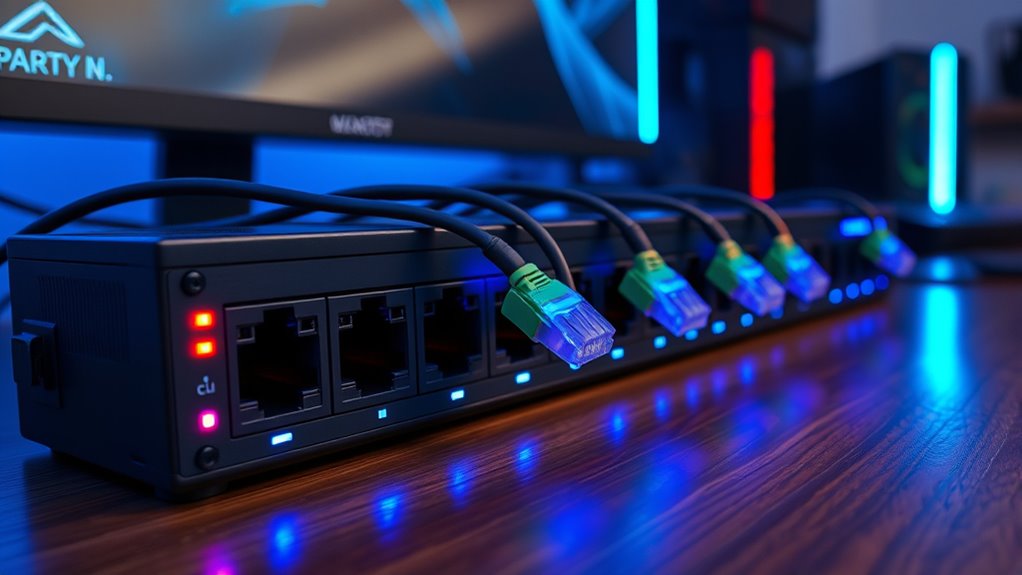
- Gigabit Ethernet Switch: This is the backbone of expanding your wired network. A dedicated Gigabit Ethernet switch gaming device provides multiple 1 Gbps ports, allowing you to connect your PC, console, smart TV, and other network-dependent devices directly to your router without compromising speed or stability. Look for unmanaged switches for simplicity, or managed switches if you need advanced features like QoS.
- Category 5e (Cat5e) or Category 6 (Cat6/6a) Ethernet Cables: Ditch older Cat5 cables, which are not designed for Gigabit speeds. Cat5e is the minimum requirement for 1 Gbps, while Cat6 and Cat6a offer better performance, especially over longer distances and with less crosstalk. Invest in good quality, properly terminated cables.
- Gigabit-Capable Router: Most modern routers come with Gigabit Ethernet ports. Ensure your router's LAN ports are 1000 Mbps capable. If your router is older, this might be a necessary upgrade.
- Gigabit Network Interface Card (NIC): Your gaming PC or console must have a Gigabit Ethernet port. Most modern gaming motherboards and consoles (like PS5, Xbox Series X) include these by default.
Tips for Optimizing Your Gigabit Gaming Setup:
- Wired is Always Best: Prioritize wired connections for your gaming PC and consoles. Reserve Wi-Fi for less latency-sensitive devices like phones or tablets.
- Quality Cabling Matters: Use appropriate length and quality Cat5e or Cat6 cables. Avoid excessively long runs if possible, and ensure cables are not tightly coiled or run alongside power lines, which can introduce interference.
- Strategic Switch Placement: Place your gigabit ethernet switch gaming device centrally or near your gaming setup to minimize cable length to your gaming devices.
- Router Quality of Service (QoS): Many modern routers offer QoS settings, allowing you to prioritize gaming traffic over other network activities (like downloads or streaming). Configure this to give your game data preferential treatment.
- Firmware Updates: Keep the firmware on your router and switch updated to benefit from performance improvements and security patches.
- Consider Your ISP Speed: While Gigabit Ethernet handles your internal network, remember that your overall internet speed is still limited by your Internet Service Provider (ISP). Gigabit Ethernet ensures you can fully utilize whatever speed your ISP provides. For a deeper dive into the actual performance differences, you might find our comparison helpful: Gigabit vs. Fast Ethernet: The Gaming Performance Difference.
Conclusion
In the evolving landscape of online gaming, a robust and responsive network connection is as vital as your gaming rig itself. Gigabit Ethernet provides the essential foundation, delivering not just raw speed, but also the unwavering stability and ultra-low latency critical for competitive play and immersive experiences. By understanding its benefits and thoughtfully integrating components like a reliable gigabit ethernet switch gaming device and quality cabling, you can eliminate common network bottlenecks and interference, ensuring your gaming performance is never compromised by your connection. Upgrade to Gigabit Ethernet, and unleash the full potential of your gaming setup, enjoying smoother gameplay, faster downloads, and an undeniably superior online experience.